HAL® S3000 - Wireless and Tetherless, Prehospital and Nursing Care Patient Simulator
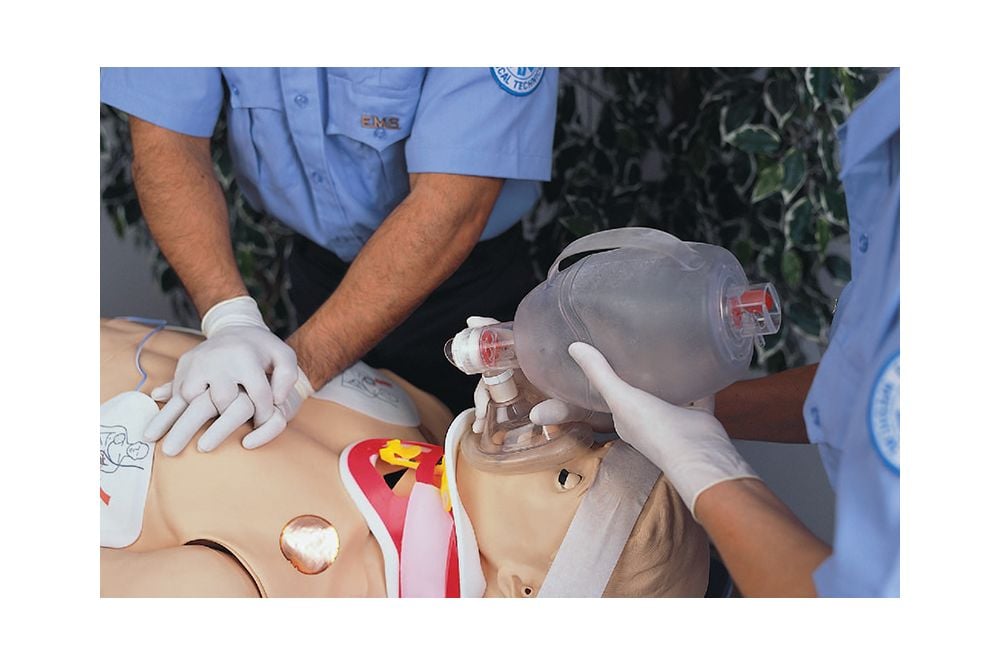
HAL's advanced design and tetherless technology eliminate external tubes, wires, and compressors. HAL operates continuously during transport so that training can occur in the working environment. Rush HAL from the accident scene to the ER or the ICU while care providers diagnose and treat his condition using real monitoring and resuscitation equipment. HAL® smoothly transitions between physiologic states in response to commands from a wireless PC.
HAL's advanced design and tetherless technology eliminate external tubes, wires, and compressors. HAL operates continuously during transport so that training can occur in the working environment. Rush HAL from the accident scene to the ER or the ICU while care providers diagnose and treat his condition using real monitoring and resuscitation equipment. HAL® smoothly transitions between physiologic states in response to commands from a wireless PC.
- General Wireless and tetherless; fully responsive even while being transported1 Internal rechargeable battery provides up to 6 hrs. of tetherless operation2 Airway Oral or nasal intubation: ETT, LMA, King LT Programmable difficult airway: laryngospasm, pharyngeal swelling, tongue edema Sensors detect depth of intubation Surgical airway: tracheostomy or needle cricothyrotomy Unilateral chest rise with right mainstem intubation Multiple upper airway sounds Breathing Control rate and depth of respiration and observe spontaneous breathing Ventilation is measured and logged Gastric distension with excess BVM ventilation Select independent left, right, upper, and lower lung sounds Accommodates assisted ventilation, including BVM and mechanical support Tension pneumothorax and bilateral needle decompression sites Bilateral chest tube sites at 5th intercostal space Optional Real EtCO23 Neurologic Active Eyes: programmable blink rate, pupil size, and pupil reaction Severe or mild seizures Preprogrammed speech responses Wireless streaming voice: be the voice of HAL® and listen to replies Cardiac/Circulation Normal and abnormal heart sounds, rates, and intensities ECG monitoring using real devices Real-time CPR feedback: chest compressions are measured and logged Bilateral IV sites Measurable blood pressure with audible Korotkoff sounds SpO2 monitoring using real devices Visible cyanosis Bilateral carotid, radial, brachial, femoral, popliteal, and pedal pulses Intraosseous access at tibia Other Bowel sounds in four quadrants Male urinary catheterization with fluid return
—
No documentation added yet.
—
Related products